Monday, April 11, 2011

さくぶん2

私はモーリシャスからきました。小学生のとき、たいせつなしけんがありました。国のぜんこくのしけんでしたから、とてもたいへんでした。
みんなで12さいのモーリシャス人の学生はしけんをしなければなりませんでした。
毎日私は勉強していましたから、強くなりました。毎日私は午後9時にねていて、
午前3時におきていました。コーヒーやお茶をたくさん飲んだり、本を読んだりしました。わたしは勉強をがんばりましたから、すうがく(mathematics/arithmetic)がとくいでした。
でも、私はたくさん勉強しましたから、りょうしんはしんぱいしていました。母はきをつけてくださいといいました。父はときどきケンちゃんはやすみをとるといいました。
ぜんこくの しけんがおわってから、せいせきはとてもよかったです。それから、モーリシャスの学生のなかで、私がいちばんの学生でした。すごいでしょう?家族がニュースをしっているとき、みんなでとてもうれしかったです。私もうれしかったです。
家族は私にプレセントを買ってくれました。父は『いくらせいせきがよくなくても、ケンちゃんはすきです』といいました。私の家族はすごいとおもいます。ずっとたいせつな人です。

Monday, March 28, 2011

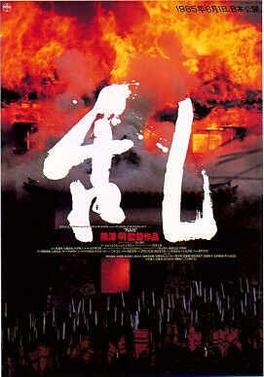
らんーあきら くろさわ の 映画 。

映画「らん」は だいみょ もりもとなる の でんき (life story) と シェクスピヤ の 「キングリール」のかいさく(adaptation of story)です。「らん」の いみ は 「Chaos」や 「revolt」 です。


Plot:
The Lear counterpart in the movie is an elderly 16th-century warlord (Tatsuya_Nakadai), who announces that he's about to divide his kingdom equally among his three sons. In his dotage, he falls prey to the false flattery of his treacherous sons (Akira_Terao and Jinpachi_Nezu), while banishing his youngest son (Daisuke_Ryu), the only member of the family who loves him enough to tell him the unvarnished truth. Thanks to his foolish pride, his domain collapses under its own weight as the sons battle each other over total control.


Trailer:


Sunday, March 20, 2011

かんじのかきかたのほん。

はやすみに、モントレアルへいったとき、おもしろかったほにゃにはいりました。マンガの本屋ですが、日本語のべんきょうかたのほんをうりました。ほんはにさつをかいました。

これは:
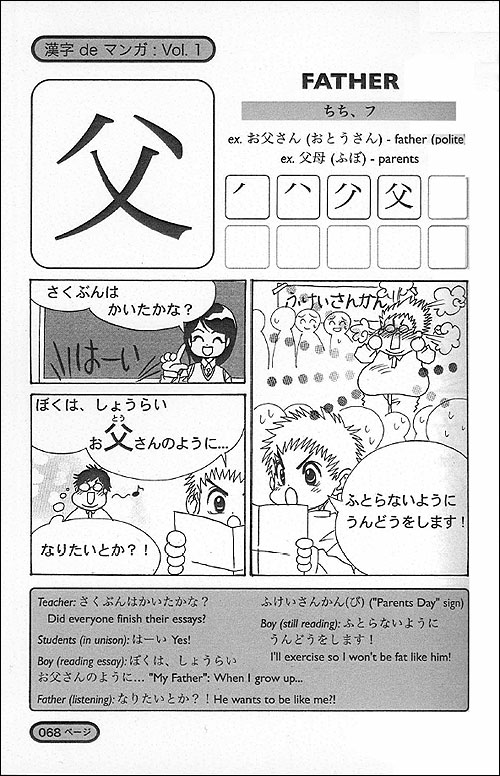
"Les Kanji en Manga" ( "Kanji in Manga Land" english version)
ほんはとてもおもしろかったです。ほんがかんじのかきかったをおしえています。わたしはほんで日本語ではやくよくなります。

Example of the book content:


Wednesday, March 2, 2011

POKEMON

Would you rather fight this?


Or THIS?


みんなさんらいしゅうのしけんはがんばってね!

Saturday, February 26, 2011

ファイナルファンタジ - Artistic, gaming and musical masterpiece.

スクエーエニクスはファイナルファンタジがとてもおみしろくて、たのしです。Hironobu Sakaguchiはファイナルファンタジをつくりました。ガムはすごいですよ。グラヒクスはいちばんたのしです。そして、うたはとてもきれいですね。ファイナルファンタジのうたのコンポサーはNobuo Uematsu です。
ここはうたです:


Final Fantasy VII - Aeris' Theme (Death of Aeris)


Final Fantasy X-2 : A thousand words


Final Fantasy XIII


Final Fantasy X: sutekidane


それから、10日3月と11日3月にNobuo Uematsu はニューヨークでコンサートがあります。みんなさんいっしょにいきませんか。わたしとロランさんはコンサートがいきたいです。


Distant Worlds features composer Nobuo Uematsu, conductor Arnie Roth, the Distant Worlds Philharmonic Orchestra and many special soloists including renowned FF XIV vocalist Susan Calloway, plus state-of-the-art HD videos and stills shown on a massive screen highlighting the games’ most memorable sequences. Featuring scenes from throughout the Final Fantasy series as well as music from the newly released Final Fantasy XIII and XIV, this is truly a concert not to be missed.


It will be a once in a lifetime experience! For all Final Fantasy fans - this is the chance to see the game that shaped your childhood! ( I have to admit it, I still play Final Fantasy myself even if I'm 20! lol)


Here is a link where you can buy tickets:FInal Fantasy Distant World NYC Concert - ticket information


ここは an excerpt of the concert:


Vocaloid - はつね みく は すごい ですよ。

ボカロイヅははつねみくがたのしくて、おもしろいです。
日本にはつねみくちゃんのうたはとてもゆめいです。
みくちゃんのうたのなかでlast night,goodnightがいちばんすきです。


Monday, February 21, 2011

すく分1:ともだちにりょこうさきをしょうかいする。

こんにちはクリスさん。
おげんきですか。にほんのせいかつはどうですか。はるやすみはすれすれですね。
わたしのはるやすみもさんがつです。とてもたのしいです。いっしょにりょうこをしませんか。

クリスさんはいいでんきがすきですから、モーリシャスへビーチにいきませんか。でんきはよくて、あたたかいです。うみはあおくて、さかながおおいです。インヂアンオシャンのしまめぐりのなかでモーリシャスがいちなんきれいですから、ツーリストがおおいです。にぎやかで、たいへんです。でも、わたしのくにですから、モーリシャスのエクスパートですね。まかせとけ!

クリスさんはモーリシャスのビサがいります。クリスさんはにほんのえんをかえなければなりません。モーリシャスはいろいろなもようしものがたくさんあります。クリスさんはサーフをすることができますか。ビーチでタマシンがいちばんきれいです。サーフをするまえにうみでおよぎてください。そして、ビーチでねて、うみでつりをします。それから、ルイソクレオルーへむかえにいきます。ものをとてもやすいですが、いいです。タマリンのホテルゆめくて、すごいですから、わたしたちはさんがつ16にちからさんがつ22にちまでホテルにいます。モールシャスのこどもとやさいとさかなはとてもおいしいですから、ゆめいなオシェアンレストランへしょくじしにいきます。

クリスさん、なにがほしいですか。りょうこはだいじょうぶですか。

じゃまたあとで

ケンディー

Communication

What I expect to learn from this podcast:


- Being able to use good vocabulary to convey thoughts, emotions, feelings - transmit a message to the other party and be able to understand the other's point of view and opinions as well.
- Good sentence structure used in simple ways to get your point accross and make the conversation interesting at the same time
- how to best communicate in Japanese: cadence, syllabic emphasis, tone, facil expression and body language are all essential when trying to embrace japanese culture and make one understood in a conversation. Similarly, we should respond to the other parties comments with body language to confim/reject what they are saying.
- natural and effortless pronunciation, compound sentence formation
- learn new grammar patterns and hear known patterns reinforced
- sharpen listening skills through practice
- Japanese conceptions of city wildlife
- Learn about Japanese culture by relating to potential viewers and making sure the podcast interests them.

What i think about communication:


gaining a broader/deeper understanding of other while getting your points accross. be able to effortlessly present, debate and support the ideas we are trying to get accross to the other while making sure the dialogue is a two-way traffic and not a monologue. It is essential that all parties are able to feel confortable enough to make their views heard

individuals share their experiences, culture and way of thinking through exchange of ideas

Wednesday, February 2, 2011

びじゅつ

わたしはびじゅつが好きですから、びじゅつかんへいっています。MOMAびじゅつかんがいちばん好きです。
それで、ここはえとおんがくなどがすきです。

一。日本人のおどりです。えいこ&こまはニューヨークにゆめいなダンサーです。えいこ&こまはコロンビアだいがくのドナロドキーヌセンターでダンスをしました。とてもすごいですよ。


ニ:きょねんMOMAのチムバートヌexhibitです:
I really like his satirical, almost morbid expression of love. I think it is a feeling that is often exagerated and people are more in love with the act of "falling in love" than loving their actual partners. Not that true love doesn't exist - just that one needs to take the time to find the right person for them.


三:えと、これは私の絵です。かいてはとても好きです。It's a great past time of mine, Columbia makes it hard to keep up with drawing. Hopefully I'll have time to take art classes when i'm done with my major or simply take East Asian classes ^____^


四:Van Gogh Starry Night at the Moma.
とてもきれいですね。わたしはえがいちばんすきです。


五:フランスごのほん: Le chercheur D'or par J.M.G Le Clezio. 私はフランス後が夜わかりますから、I just had to include this book which is ALSO a piece of art and that won the nobel literature prize in 2008. It talks about Mauritius as well so you should all read it!


六:And lastly, my favorite piano piece so far.韓国人のArtistです。
Yiruma - River Flows in You

Wednesday, January 26, 2011

おかいりなさい。

みんなさんこにちは。
もう2011ですよね〜
 みんなさんふゆのやすみはなにをしましたか。
わたしはMAURITIUSへかえりましたか。おもしろかったですよ。毎日ともだちとビーチへおよぎにいきました。
このしゃしんをみてください。きれいですね。


かわいいですね!


このビーチのしゃしんです。いいでんきですね。あたたかいです。


ばんビーチとうみはとてもきれいいですよ。


ははとともだちとPort Louis (The Capital)へかいものしにいきました。
Crafts market はおおきいです!Crafts marketはものがたくさんあります。


The beautiful sugarcane fields of my island <3


くだものが大好きです。おいしいくだものですから。


Sharing a beautiful sunset with the family


A Club in Mauritius (legal age is 18! haha)


わたしのかぞくです。^___^


I miss home already. (T_T)

Tuesday, December 7, 2010

さくびん#3−二十ねんごのわたし

今わたしはコロンビイアだいがくのにねんせいです。
とうけいがくがとてもだいすきですから、二十ねんごのわたしは ほけんすうりいしです。
ほけんすうりいしはいいしごとですが、あまりやさしくないです。そしてたいへんなしごとです。
わたしはえがじょおずですから、二十ねんごマンガをかきます。ゆうめいな”マンガカ”です。
ニューヨークがすきですから、ニューヨークにおおきいうちがあります。
にほはアメリカよりきれいですから、にほんりょこうします。それからにほんごがよくわかります。
しゅじんはとてもハンサムです。そしてしゅじんはスポーツがじょうずです。こどもがふたりあります。

Tuesday, November 30, 2010

TokiTokiTokitTo - くだものジユース

これはにほんビデオです。かわいいですね。
ビデオは日本でとてもゆうめいですから、YOUTUBEにあります。


それから、にほんに3D LIVE コンセットがありました。LIVE PERFORMANCE はとてもよっかたです。そしてかっこいいです。にほんじんはとてもおもしろいですね!


ps: As a followup for my Katakana Analysis - Notice in the first video towards the end the use of both Hiragana and Katakana when the character says "AAAAAA". First Hiragana is used, then Katakana. This in itself transcribes the complexity of use of Katakana and how in certain cases, even hiragana is used for onomatopoeia.

Katakana Analysis Final

かたかな or カタカナ is a japanese syllabary and is also a component of the Japanese writing system along with ロマジ、ひらがな and かんじ。The word katakana means "fragmentary かな", as the かたかな
scripts are derived from components of more complex かんじ.

Katakana are characterized by short, straight strokes and angular corners, and are the simplest of the Japanese scripts.

e.g:  ア(a) イ(i) ウ(u) エ(e) オ(o)

In modern Japanese, katakana are most often used for transcription of words from foreign languages. katakana is also used for country names, foreign places, and personal names. For example, France is written as フランス。

Katakana are also used for onomatoepia (words that represent sounds).
e.g: in the manga below "ズォ” is used to represent the sound of paper being torn apart. Onomatopoeia in manga probably adds liveliness, action and emotion to the art. Perhaps this is why in japan Mangas are more popular among adults than among children. Because adults having a more profound knowledge of Japanese and its onomatopoeia words, can enjoy the overwhelming complexity behind the static images on paper. It's through use of good onomatopoeia that a manga truly stands out and appeals to its readers.


Of course this is not where the use of onomatopoeia ends in manga and anime. Satou sensei in class today made me think about something worth looking into, Are Pokemon in fact onomatopoeia? 
After all Pokemon names are written in Katakana, so it is worth taking a look at.
ahahaha. this is a treat.

PIKACHU (ピカチユウ) translates for ピカ (sound of electric sparking in cables) and チユウ represents the sound of a squeaking mouse. Therefore PIKACHU is simply an onomatopoeic representation of an electric mouse. SO ADORABLE!  To think that an entire Legacy of onomatopoeia words has been left behind in a single manga/game! We can only say thanks to Ken Sugimori the original creator of the series for introducing us to this yellow fur-ball who drives us all NUTS! It is amazing how a simple onomatopoeia turned out into such a huge phenomenon that is still alive today. Our little pikachu is so famous that it is even seen in adds. A publicity campaign even used Pikachu to encourage kids to drink milk! (Make your Pikachu stronger. Give him plenty of milk~! nom nom nom.) How amazing is that? :O Pokemon was even at the Macy's thanksgiving day parade! An amazing tribute to the best combination of onomatopoeia ever. I come to think of onomoatopoeia now as sounds and syllables that can be added together for creativity and marketting of the product. After all, this mash up makes the series still very much alive today. If you want to know more about it, here's a link:Why have pokemon not died yet?

Pokedex Entry:http://www.serebii.net/pokedex-rs/025.shtml

Also a funny anecdote: Pikachu as an onomatopoeia has his own FACEBOOK GROUP! Here's a link: Pikachu is an onomatopoeia.
Other counterparts of pokemon that have onomatopoeia names are:
 1. Charmander


Charmander in Japanese is also known as ヒトカグ according to pokedex entry:Pokedex No 4 - Charmander

With charmander we see a different kind of approach. The onomatopoeia name is in fact combined with a real word! The species of fire blasting cute orange pokemon was named "Charmander", a combination of "char", an onomatopoeia meaning burnt, and "salamander", a lizard! 

2. Mew(ミユウ)
In the case of our small pink friend its name mew is based on the onomatopoeia of a cat's cry, 
ミユウ! Therefore we see 3 main types of onomatopoeia use in Pokemon: onomatopoeia combinations with words, combination with other onomatopoeia and also just a name by itself in Mew's case. What an interesting concept!
Pokedex Entry for Mew:http://www.serebii.net/pokedex-rs/151.shtml

Now let's go back to the technical stuff:
Technical and scientific terms, such as the names of animal and plant species and animals are also commonly written in katakana. 

Katakana are also often, but not always, used for transcription of Japanese company names. For example Suzuki is written スズキ, and Toyota is written トヨタ. Katakana are also used for emphasis, especially on signs, advertisements, and hoardings (i.e., billboards). Words the writer wishes to emphasize in a sentence are also sometimes written in katakana, mirroring the European usage of italics.


On the above billboard, one can see the Japanese metal band "The Gazette" with its katakana translation "ガゼット”。The idea is to market the band as a brand name in itself while at the same time creating emphasis.


"フルーツバスケット" is the title of the Japanese Manga by Natsuki Takaya Fruits Basket. The shoujo manga is very popular in Japan and has been translated in English, French and Spanish. The Katakana word is a loan word from English used by the author to express the genre of the manga. The reason why the author decided to use an English title instead of simply using the direct Japanese translation of "Fruits Basket" is because the author wanted to emphasize the importance of the title in the plot. In fact, the fruits basket game (apparently popular in Japan) introduces the heroine of the manga, Tohru. Often bullied by her classmates she was once called "rice cake" or "おにぎり” by her friends instead of being given the name of the fruit in the fruits basket game. while different fruit names would be called so that each player could in turn join the game, "おにぎり” was never called out. This represents the fact that Tohru is the odd one out - the rice ball in a game of fruits. The emphasis in Katakana of this title represents the author's desire to express Tohru's stigma and thus esposing the major dilemma she faces.


The use of Katakana here also makes her manga stand out since not many manga's in Japan have titles in Katakana. Perhaps this gives it an edge over others, because it sounds more foreign. More and more mangas in Japan are adopting Katakana titles. The popular manga "Naruto" for example is also  written as  ”ナルト” probably because the manga by itself is a worldwide phenomenon and brandname that sells incredibly well in most fields i.e. entertainment, games, toys...etc.


Japan's products ( beverages, tea and even candy) never cease to amaze me. Like this one below:


An ice cucumber flavored pepsi drink? WOW!

The creativity of the drink itself I believe is expressed in the  use of the katakana itself. Because Katakana reflects modernity and perhaps the "cool factor", hence the presence of "アイスキューカンバー" on the Pepsi bottle. Also since pepsi in itself is an American brand, by writing the flavor in katakana, it emphasizes its foreign nature, thus enticing more interest on the Japanese market.


Now books. Why do books have different ways of explaining Katakana? Well... I believe it is because there is no distinct way to describe it! The reason why a person uses Katakana can be for different reasons from naming a pokemon, to trying to make a manga page more lively for the reader, to translate proper emotions like in Haiku or simply to market a product, a brand, a band, an artist or a video game. Katakana is abstract in itself and also ambiguous. It is not meant for a sole purpose ( e.g. emphasis, marketting.... etc) but rather for a combination of all of those. On the case of loan words, it would be incorrect to believe that Katakana is a translation in Japanese of the western world. Because Japan's use of Katakana goes beyond simple reliance on foreign words from the western culture. They have shaped Katakana into a very personal masterpiece that makes of Japanese language a complex, interesting and beautifully expressive language. I believe that textbooks all give a fundamental notion of what Katakana represents but they will never be able to define a specific use for Katakana. Because Katakana is used to mean whatever the person creating/using it has in mind at the time he decided to use Katakana. As with Japanese names where one can be named in Kanji, hiragana or Katakana no one knows, textbooks also cannot be constant because there is NO constant use of Katakana. Katakana evolves because Japanese as a language ( and as a culture) evolves and changes perpetually. Therefore Katakana uses will continue to get complex such that people will have to dedicate entire encyclopedias on them to analyze their change over time.


Sources: wikipedia,  googling pictures on the internet ( the links to the pokemon sources are in the text above)

Because I am a big fan of manga in general, here is a list of common onomatoepia words found in popular mangas: http://www.japansugoi.com/wordpress/common-japanese-onomatopoeia-word-sounds-found-in-manga/

Sunday, November 21, 2010

Marcel the Shell with Shoes on

かわいいですね。みんなさん、みってください。ルムマートはわたしにおくりました。


Wednesday, November 17, 2010

にほんごのマンガプロジェーク。


これはわたしのマンガです。
ごめんなさい。。。(for being late)

わたしはいそがしいです、しけんがありますから。(T_T)


あのう、


Notice that as a manga this is read from right to left, おねがいします!


1。In the first bubble I have used ”チクトク”to express the sound of the clock ticking away as I try to study/do hw early in the morning. (I cannot study at night so I have to wake up early :(  )
Notice that I have also used ”レッド ブルー”. Usually it's コーヒーthat I drink, but this is just for exaggeration ;)


2。Yes... THE MIDTERMS that NEVER END.
”キャー”for the sense of helplessness, stress and panic that usually overwhelm me.


3。Yes I am told I eat a LOT for a girl ( whatever that means). So I used the katakana for "wobble wobble" - ”ブンブンー” to represent the amount I eat and the plates falling off haha! "ザーザー”only shows me indulging large amounts of food at one go ( again.... dramatizing! haha)


4。 ”ジーハージー” represent "huff puff puff" - the daily exercise routine to keep me sane and to stay fit while keeping stress at bay ^___^


5 。My daily dose of music. わたしはおんがくがとてもすきです。"ピキ、ピキ” is the katakana for "shake shake" (I couldn't find anything online for dancing!! *sad face* )


6。This is me at around 10-11pm, ready to go to bed and yawning ”アーアー”. I am an early bird ( if I could I would sleep at 8pm)。あくび(yawning) can also be seen on the left hand side but when I cropped it, the "あ”disappeared, すみません。


7。”スースー” represents "ZZZZZZ" so BEDTIME! and this is me right now. I need to scan this manga page and post it before I pass out! (O.O)  I hope you like it (^_^) and please leave me comments if you do!


みんなさん、おやすみ。


ケンディー


ps: sorry for the quality. my scanner wasn't working so I took a picture.